Receipts attached 1 source
Sources
-
Other source
Japan National Tourism Organization
Limits
Single primary institutional source. Advice is distinguished from established rules; check live operator notices before travel.
Corrections
No correction notes have been added for this article.
Japan accessible travel: an accessible station is only one part of an accessible journey. JNTO’s guidance for travelers with disabilities points to information on transport, accommodation and other facilities, while explicitly advising independent research for the latest details. That is the right starting point: ask about the entire route you need to use. The Japan National Tourism Organization official guidance is the primary source for this guide.
Begin with the practical requirements of the traveler, not an undefined promise that somewhere is accessible. For a wheelchair user, useful questions may include the step-free entrance, lift route, platform access and arrangements for boarding. For another traveler, the priority may be hearing assistance, clearer instructions or an appropriate room layout.
Japan accessible travel: what the official guidance establishes
JNTO notes that some destinations provide wheelchair rentals and some hotels offer bathing or showering facilities and assisted bathing services. Those statements describe possibilities, not services guaranteed at every property. Ask the chosen provider what is actually available, whether advance booking is required and whether the equipment meets your needs.
JNTO links to station-accessibility information and recommends Accessible Japan for specialist advice, including taxi questions. These are research routes rather than a substitute for confirming a particular booking. Describe what you need to accomplish: entering the station, reaching the platform, boarding the vehicle and continuing at the other end. A broad accessibility label can leave one of those stages unanswered.
For accommodation, ask for details that fit the traveler rather than simply requesting an accessible room. Useful questions may concern entrance steps, the path to the room, bathroom layout and whether assistance must be arranged in advance. Ask for measurements or photographs when those would resolve a practical uncertainty. These are suggestions for an inquiry, not dimensions or amenities this article has verified at any property.
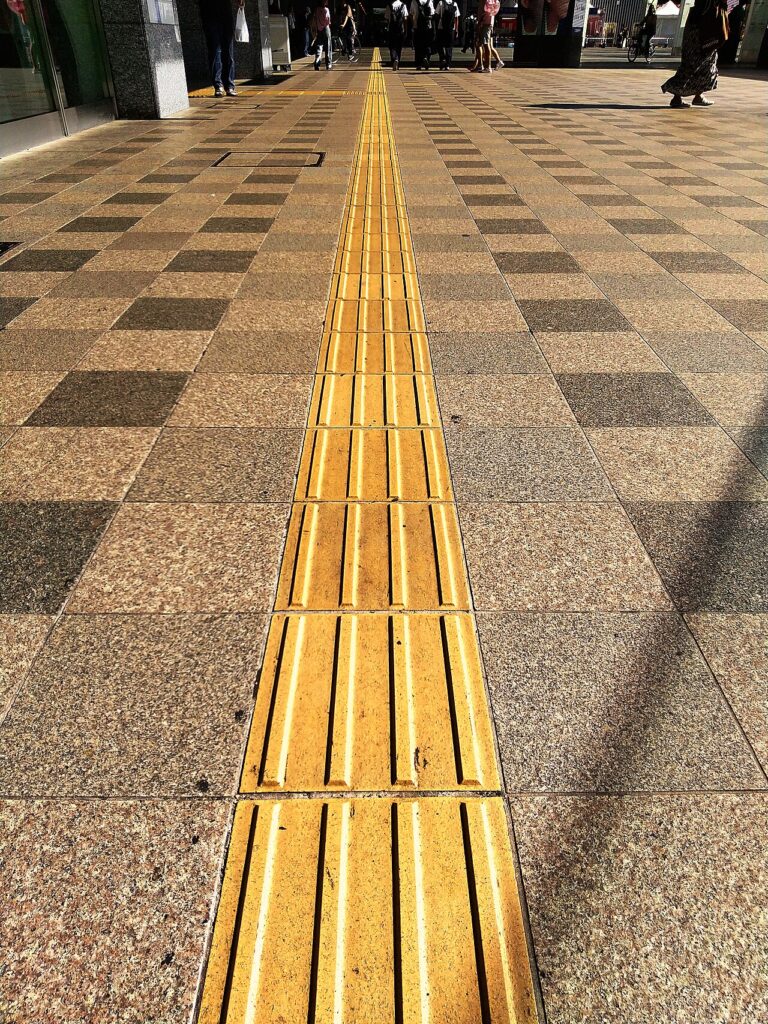
JNTO describes raised yellow tactile tiles as a feature assisting people with visual impairments. Their presence in a photograph does not establish that an entire route is suitable for an individual traveler. If wayfinding, lighting or an unfamiliar transfer is the main concern, discuss those needs directly instead of letting a discussion about wheelchair access stand in for every kind of accessibility.
Japan accessible travel: make the plan fit your journey
For a transfer between different operators, obtain information for both sides of the connection. Identify the entrance you will use and the meeting place for any arranged assistance. If a route depends on a particular lift, check for notices shortly before departure and have the operator’s contact information available. This article does not claim to have checked the operational state of every lift or confirmed an assistance booking.
Keep the plan usable if the original route changes. Record a realistic alternative, including any vehicle or accommodation arrangements it would require, rather than assuming that the next taxi or hotel can meet the same needs. Share the essential details with companions while retaining control over personal information. The goal is a journey planned around the traveler’s requirements, with specific confirmations where they matter most.
Transfers deserve particular attention. A journey can look simple on a network map while the usable route between services is different. Ask operators to confirm the accessible connection, and check current lift or service notices close to departure. Leave enough flexibility to change the plan if a necessary facility is unavailable.
Japan accessible travel: checks before you leave
Taxis are not an automatic fallback. JNTO cautions that ordinary vehicles may not accommodate electric wheelchairs and points readers toward specialist accessibility advice. Confirm the vehicle and loading arrangements when booking rather than discovering a mismatch at the curb.
Keep written confirmation of the arrangements that matter most, alongside the contact details for the relevant operator or property. This guide deliberately omits a national accessibility percentage: such a number cannot settle an individual journey. It is a planning checklist based on published guidance, not an inspection of stations, streets or hotel rooms and not a promise that a particular route is currently usable.